News
APS Fall 2026 Prizes and Awards
Long-time CER member Patrick "Pat" Diamond, also a distinguished professor in the Department of Astronomy & Astrophysics" has received the prestigious American Physical Society Division of Plasma Physics James Clerk Maxwell Price in Plasma Physics. Pat was cited "For theoretical contributions to the statistical dynamics and self-organization in plasmas, especially experimentally confirmed predictions of predator-prey interactions between turbulence and emergent zonal flows near the LH transition and the ExB staircase in confined magnetized plasmas."
The excellence of CER's members was confirmed through another award for Alessandro Marinoni, a professor in the Department of Mechanical and Aerospace Engineering. Professor Marinoni jointly received the John Dawson Award in Plasma Physics Research for "advancing the negative triangularity tokamak concept, through dedicated experiments at high beta, toward readiness for a fusion pilot plant."
Congratulations, Pat and Alessandro!
CER Associate Research Scientist Simon Bott-Suzuki leads the Pulsed Liner Fusion collaboration for Inertial Fusion Energy
May 19, 2026 - by Simon Bott-Suzuki
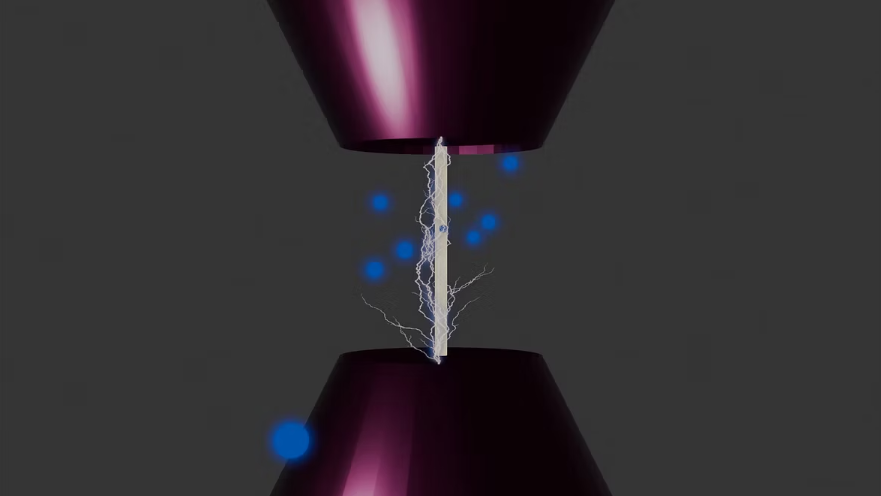
Pulsed Liner Fusion is a collaborative network of internationally recognized academics, national laboratories and private companies currently working towards fusion energy using variants of pulsed power and liner-type loads. This is coordinated by Simon Bott-Suzuki to promote and advocate for the pulsed power approach to inertial fusion energy. This founded on demonstrated modular, pre-ratable pulsed power drivers, proven liner target system like the Sandia-developed MagLIF design, and the need to address significant engineering challenges in both high yield and rep-rated operation.
The network brings together the expertise at Sandia National Laboratories, industrial partners in Pacific Fusion and First Light Fusion and academic researchers at UC San Diego, the University of Michigan, Cornell University, the University of New Mexico and Imperial College London. This group will build on decades of experience and federally supported research to realize the potential of fusion as a deployable power generation solution.
Information on the Pulsed Liner Fusion approach, news items, research updates and contact details for the PIs can be found at the collaboration website, and a promotional flyer is here.
Can Physicist Tamma Ma Lead Us to Abundant Clean Energy?
February 9, 2026 - by Frances Stead Sellers
After achieving success in the lab, Ma hits the road to explain the possibilities of a future using nuclear fusion as a power source.

The high point of Tammy Ma’s career happened while she was sleeping.
Early one December morning in 2022, scientists at the National Ignition Facility in Livermore, California, fired 192 lasers at a peppercorn-size fuel pellet suspended in a giant blue orb.
Almost 400 such shots are deployed each year to test materials under stress and further our understanding of the physics of nuclear weapons testing and astrophysical phenomena like supernovas. A few test the potential for developing a new supply of clean energy by replicating the processes that power the sun — Ma’s chief focus as director of the Livermore Institute for Fusion Technology.
The next morning, Ma’s phone lit up as she prepared to board a flight to Washington, D.C. Members of her staff told her all the signs of a new breakthrough were there: A gamma ray alarm had gone off; the fluorescent ceiling lights in the target bay went out; and the early diagnostics were convincing. The lasers had forced atoms to fuse and create what appeared to be a net energy gain, which would mark a historic milestone in the decades-long effort to produce commercial energy from fusion, the science that might one day provide abundant, carbon-free energy.
The scientists ran and reran the numbers for a week before the Livermore team confirmed the findings at a news conference. “We had been burned in the past. We have learned to be very, very careful,” said Ma in a recent interview. The taxpayer-funded facility had been dogged by failure, raising fears about its future financing.
“Our job as the national lab is to be the arbiter of truth,” she said, reflecting her natural caution even as she recalled her suppressed glee when she contacted her mother from the San Francisco airport that early-December day: “Mom, I think we got ignition!”
“Our job as the national lab is to be the arbiter of truth,” Ma said. (Arsenii Vaselenko/For The Washington Post)
In 2022, the National Ignition Facility achieved fusion ignition. (Arsenii Vaselenko/For The Washington Post)
The older child of Chinese immigrants who viewed science as the route to their children’s success, Ma was raised to respect America’s academic enterprise. After school, her father, an electrical engineer, would load Ma and her younger brother into his old gray Camry and drive them over the hills from their home to Livermore to participate in STEM outreach events.
Not that she foresaw a career in fusion. She was more interested in aerospace engineering as a teenager and dreamed of becoming an astronaut. But during the summer between high school and her freshman year at the California Institute of Technology, Ma interned at Livermore, sitting in front of a computer for eight hours a day in a fruitless search for new planets somewhere between Saturn and Uranus. While there, she toured the unfinished NIF and felt a sense of awe standing below the 30-foot diameter spherical blue target chamber, which had to be lowered into place by cranes so the rest of the stadium-size NIF could be constructed around it.
“It would be so cool to do science on this scale,” Ma remembers thinking. “Big, team science.”
Twenty-five years later, Ma, 42, remains motivated by that kind of mission-driven research — tackling “the hardest scientific problems that humans can go after” — even as she remains acutely aware of the dangers of overpromising. The surging power demands of data centers, the need to reduce reliance fossil fuels, the moral obligation to electrify the developing world, and the search for energy independence have captured public attention and investor interest.
“We’re in a hype cycle,” Ma said, resulting from a confluence of real technological advances, the application of artificial intelligence and what she describes as “crazy promises.” The once-esoteric field is now attracting tech bros, venture capitalists and philanthropists like Bill Gates. Private companies have sprung up from promising enterprises such as Commonwealth Fusion Systems, which is breaking ground for a magnet-powered rather than laser-powered fusion plant in Virginia, as well as fly-by-night start-ups. President Donald Trump has even entered the fray, striking a $6 billion deal between his media and technology group with the Google-backed fusion company TAE Technologies.
From left, Michael Stadermann, Arthur Pak and Tammy Ma of the Lawrence Livermore National Laboratory announce a breakthrough in fusion research in 2022. (Chip Somodevilla/Getty Images)
While the dream of producing abundant clean energy is compelling and the focus of her current work, Ma remains keenly aware of NIF’s core missions of supporting materials science and nuclear weapons stewardship by studying matter under extreme conditions, including testing the physics of hydrogen bombs without performing actual detonations.
“It’s about making sure the U.S. remains competitive,” said Ma, who is a strong believer in the deterrence that comes from demonstrating the country’s scientific prowess to potential foes. “Our work is open on purpose to show the world how good we are, so you had better believe our weapons will work.”
While some fusion researchers shy away from the term “nuclear” for fear of losing public support, Ma describes herself as belonging to “a different camp.”
“Fusion is a nuclear power,” Ma said, though more akin — in terms of risk — to nuclear medicine than nuclear fission with its challenges of highly radioactive waste disposal and the potential for a meltdown. “The onus is on us to communicate, not to be opaque.”
“The challenges of harnessing fusion energy will be even more difficult than the process of getting to ignition,” Ma said. (Arsenii Vaselenko/For The Washington Post)
To that end, she travels frequently, appearing at high-level conferences and in elementary school classrooms. She has given a TED Talk; she advises governments; and she makes a priority of engaging with community groups. She is driven by an understanding that big team science aimed at solving the most difficult scientific problems will require an army of experts of all kinds, explains Arturo Dominguez, a plasma physicist at Princeton University who has collaborated with Ma on educational outreach programs.
All of which means that Ma spends little time in the lab these days. “I don’t know how to turn a screwdriver anymore,” she laughs.
Looking ahead, she sees a future in some form of science diplomacy, arming policymakers with scientific expertise, even as she remains committed to tackling the hardest scientific problems of our age.
“The challenges of harnessing fusion energy will be even more difficult than the process of getting to ignition,” Ma said, reflecting the soaring ambition and down-to-earth realism that have shaped her successes so far.
https://www.washingtonpost.com/post-next/interactive/2026/tammy-ma/
The U.S. needs a national fusion strategy before our lead in energy slips away
February 3, 2026 - by Mike Campbell, Farhat Beg, and Mihir Morah
Fusion has been in the news a lot recently given its promise as an abundant and clean source of energy that could help power the AI revolution.
Late last year, the Trump administration overhauled the Department of Energy by phasing out several clean-energy offices while shifting the focus to fusion (along with AI, quantum and critical minerals). The Trump Media & Technology Group then annouced a merger with TAE Technologies, a fusion company based in Irvine. And just last week the Canadian company General Fusion annouced it was also going public.
Although these developments have created a lot of buzz among investors, far more than splashy headlines are needed to address the physics and engineering challenges for commercial fusion to become a reality. And without a coordinated national strategy, the United States could lose its lead in fusion, a field that will be required for any country's "energy dominance" in the future. Full article here.
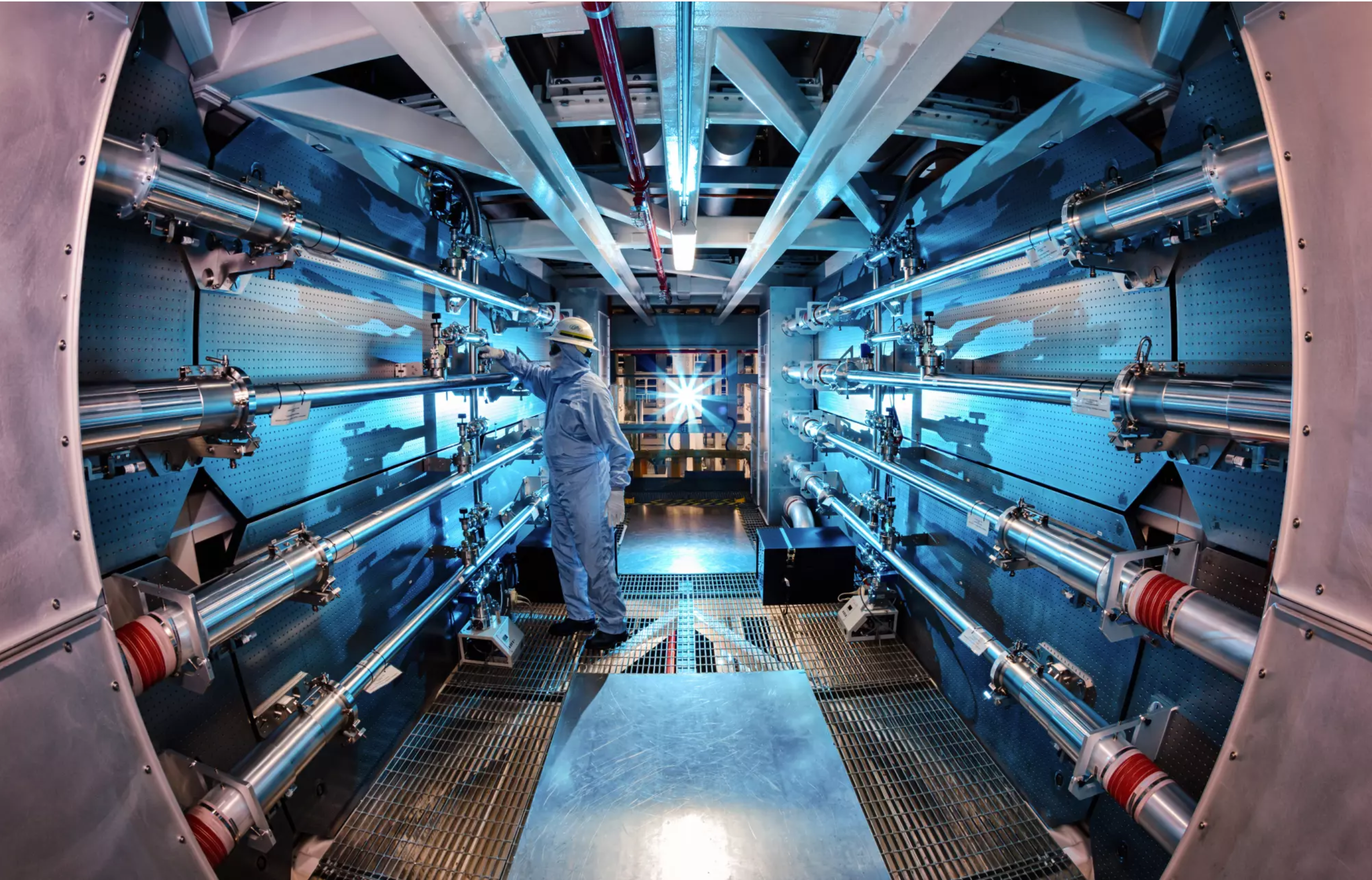
UC awards $8M in multi-campus research grants including one to Dr. Farhat Beg, a co-leader of one of the two teams awarded $4M to research fusion energy.
November 17, 2025
The University of California, through its Initiative for Fusion Energy, has awarded $8 million in multicampus research grants, in partnership with UC-managed national laboratories, to fund research aimed at accelerating progress toward fusion energy.
Two winning research teams will each receive $4 million over three years. According to the university, the teams are composed of UC faculty across a wide range of disciplines, representing five UC campuses and the UC-managed Lawrence Livermore and Los Alamos National Laboratories. Full article here.

Upgraded UC San Diego Facility Accelerates Efforts to Develop Materials for Fusion Reactor Walls
November 12, 2025
A newly upgraded fusion research facility at the University of California San Diego is expected to reduce the time and cost required to develop and demonstrate new materials that are fit to line the walls of fusion reactors.
In the upgraded facility at the UC San Diego Jacobs School of Engineering, researchers will now be able to expose materials samples to both fusion plasmas and to high-energy ions at the same time, in a controlled experimental setting.
This approach simulates the conditions that will be found in magnetic fusion energy devices, and will allow academic, industry and government researchers to develop new materials for fusion reactor walls.
A $15 million U.S. Department of Energy award allowed UC San Diego Mechanical Engineering Professor Emeritus George Tynan to add the ion beam accelerator to his lab’s existing experimental infrastructure. The upgraded facility fills an important need for fusion researchers looking to develop new fusion reactor materials. Full article here.

CER Associate Research Scientist Simon Bott-Suzuki delivers Plenary talk at PPPS 2025
July 7, 2025
CER Associate Research Scientist Simon Bott-Suzuki recently presented a plenary talk at the combined 25th IEEE Pulsed Power Conference (PPC) and the 52nd IEEE International Conference on Plasma Science (ICOPS) held June 15-20, 2025 in Berlin, Germany ( https://www.ppps2025.kit.edu/219.php). The talk encompassed the historical performance of inertial confinement systems driven by pulsed power, highlighting the role of academic collaborations in providing innovative solutions to fundamental physics questions over the last several decades. The presentation concluded by highlighting the recent impressive performance of the MagLIF fusion system developed by Sandia National Laboratories and being pursued by Pacific Fusion for facility engineering gain in the near future.
Research discussed in the presentation will be published in an upcoming special issue on the IEEE Transations on Plasma Science, to be published in April 2026, and a pdf of the talk can be found here.
CER Associate Research Scientist Simon Bott-Suzuki recently published an open-access article in Innovation News outlining the recent progress and advantages of magnetically driven inertial fusion energy (MD-IFE)
November 20, 2024
CER Associate Research Scientist Simon Bott-Suzuki recently published an open-access article in Innovation News outlining the recent progress and advantages of magnetically driven inertial fusion energy (MD-IFE). This approach uses large-scale pulsed power drivers to compress cylindrical fusion targets generating high energy yields in each shot. This enables far lower repetition rates than most other inertial fusion schemes, making MD-IFE amenable for application in a power station. Coupled with recent dramatic progress in performance, MD-IFE is one of the most promising and economically viable approaches for energy gain for putting fusion energy on the grid.
Dr Bott-Suzuki, also presented a technical summary during a plenary talk at the Dept of Energy Inertial Fusion Energy Workshop, held at Lawrence Livermore National Laboratory, on behalf of the pulsed power IFE community.
A pdf of the talk can be found here.
CER Assistant Project Scientist, Renato Perillo, presented recent work on Triple Play: Managing ELMs for Efficient Fusion Energy at the 66th Annual Meeting of the APS Division of Plasma Physics (DPP) in Atlanta, Georgia
October 11, 2024
CER Assistant Project Scientist, Renato Perillo, presented results of work on plasma instabilities called "edge localized models," or ELMS and how to deal with them via an invited talk at APS-DPP.
CER Professor, Farhat Beg, is Co-Director of the new Fusion Engineering Institute
October 8, 2024
CER Professor, Dr. Beg, is Co-Director of the Fusion Engineering Institute, a new engineering institute led by the Jacobs School of Engineering focused on making sure humanity’s recent advances in fusion science translate into safe, abundant and affordable clean energy for California, the nation and the world.
CER Associate Researcher, Matthew Baldwin, receives funding for UC San Diego's PISCES facility through the U.S. Department of Energy (DOE) Advanced Research Projects Agency - Energy (ARPA-E)'s Creating Hardened And Durable fusion first Wall Incorporating Centralized Knowledge (CHADWICK) program
September 27, 2024
University of California, San Diego (UC San Diego) – La Jolla, CA High Flux Plasma-Materials Interaction Testing for Rapid Fusion Materials Development - $1,345,309 University of California, San Diego’s (UC San Diego) Plasma Interaction with Surface Component Experimental Station (PISCES) facility is a unique long-standing scientific capability within the U.S. During the CHADWICK program, the PISCES facility will offer a range of plasma-materials interactions services to the material development teams. The facility will aid teams in testing how new materials will react to the plasma and irradiation environment expected in a fusion power plant.
Read the full press release here.
CER Director, Jan Kleissl, announced as Henry G. Booker Endowed Chair in the Jacobs School of Engineering
August 6, 2024
CER Director, Dr. Kleissl, is one of 18 new endowed chairs in the Jacobs School of Engineering at University of California San Diego. Within the Department of Mechanical and Aeroscpace Engineering, Dr. Kleissl is the Henry G. Booker Endowed Chair.
Tyler Lynch, Reserach and Development Engineer, awarded 2023-2024 UC San Diego Exemplary Staff Employee of the Year Award
July 23, 2024
CER's very own Tyler Lynch recognized as 1 of 15 professional and support staff members receiving the recognition of 2023-2024 Exemplary Staff Employee of the Year. Tyler is part of the PISCES group led by Dr. George Tynan.
Interview with CER Director, Jan Kleissl, Featured in WalletHub
April 10, 2024
The article discusses the relatedness between eco-friendliness and personal finance. Dr. Kleissl is featured as one of a few environmental experts and was asked a series of questions related to eco-friendliness at the household and governmental levels. A snipit of Jan's interview is below.
Q: What policies can state and local authorities pursue to make their communities more environmentally friendly?
A: The single most effective strategy is higher population density. This translates to more people living in condos or apartments versus single-family homes. Denser living reduces transportation distances and increases urban walkability. Multi-family units also reduce community energy use per capita because everyone's AC has to balance heat coming through 1 or 2 outside walls rather than 4 walls and a roof & floor of a house. Urban rezoning strategies are needed to permit higher-density construction.
Collaborative $9M UC San Diego Award Aimed at Sparking Fusion Energy Breakthrough
February 27, 2024
In a pioneering initiative, universities, industry leaders, and national laboratories are banding together to accelerate the development of fusion energy. Funded by the Department of Energy (DOE) and powered by a $9 million budget over four years, the project named SMARTS (Surrogate Models for Accurate and Rapid Transport Solutions) aims to pave the way for more efficient and reliable fusion reactor performance prediction.
Funded as part of the DOE's $112 million in awards to the Scientific Discovery through Advanced Computing (SciDAC) program , SMARTS brings together a consortium of institutions including University of California San Diego, Massachusetts Institute of Technology (MIT), General Atomics, Sapientai, Kalling Software, Oak Ridge National Laboratory, and Sandia National Laboratory.
UC San Diego is Part of DOE Grant to Establish Inertial Fusion Energy Hub
February 7, 2024
The U.S. Department of Energy has awarded a four-year, $16 million grant to a multi-institutional team led by Lawrence Livermore National Laboratory and including the University of California San Diego to establish a national Inertial Fusion Energy (IFE) Science & Technology Accelerated Research for Fusion Innovation & Reactor Engineering (STARFIRE) Hub.
This IFE hub will accelerate demonstration of high-gain target designs, target manufacturing and engagement and diode-pumped solid state laser technologies, with development of these technologies guided through an IFE-plant modeling framework. The project will also begin developing the workforce of the future for IFE through partnerships with leading universities and innovative new curriculum development and implementation.
View past news articles in the News Archives.

Center for Energy Research (CER)
Contact Us
P: (858) 534-6196
F: (858) 534-7716
F: (858) 534-7716
Hours: 8:00am-3:30pm M-F
9500 Gilman Drive #0417
La Jolla, California 92093-0417
We are located in SERF 209, directly East of the Price Center. We also have offices on the 4th floor of EBU-II.